Your Guide to a Successful Writing Career
| |||||
|
by Moira Allen
Contrary to popular myth, you don't have to have an agent, or connections in the industry, to get published. What you do need to know is how to present your work in the most professional manner possible. While the steps below won't guarantee that your book will be published, failing to take them will virtually guarantee that it won't! These are the basics every editor expects you to know before your manuscript hits his or her desk. 1) Write the book. If you haven't written your book yet, this isn't the time to ask how to get it published. Editors are interested in products, not ideas. If you're a new writer, editors want to be sure that you have what it takes -- skill, stamina, and discipline -- to complete a full-length book. 2) Define your audience. What is your book about? Who is the intended readership? These are questions an editor will ask; being able to answer them will help you choose an appropriate publisher. If your book is a novel, to what genre or category does it belong? (Beware of books that "defy" genre categorizations -- the "I'm writing a sort of romantic-science fiction-mystery combining elements of Stephen King and Danielle Steele" syndrome. This tells editors that you either haven't refined your concept, or don't understand the book market.) 3) Research the market. Absolutely the worst thing you can do is "cold-call" publishers to ask if they might be interested in your book. Instead, find out who produces books like yours. Browse your local bookstore, and make a list of publishers who offer books in your category. If you're writing a children's book, for example, note who publishes books for the same age group or of the same type (e.g., mystery, teen romance, horror, picture books). 4) Do your homework. Look up promising publishers in the current Writer's Market or Literary Market Place (in the library reference section). There, you'll find the publisher's address and the editor to contact. Specialized market books are also available for poetry, novels and short stories, children's books, romances, mysteries, and science fiction. Writer's Market also tells you what a publishing company is buying, its rates, and how to approach the editor. For example, some publishers want to see your entire manuscript, others want a query letter outlining your story idea, and still others want a book proposal and/or a chapter-by-chapter outline. Some accept unsolicited manuscripts; others only accept books from agents. If you need more information, write or call the publisher to request writer's guidelines. 5) Prepare your manuscript. These days, editors won't even look at a manuscript that isn't prepared professionally. Many publishers will now accept a manuscript electronically, but it still needs to be formatted "correctly." Some publishers still prefer print manuscripts, in which case, print it on high-quality white bond paper.Double-space your manuscript and leave a 1-inch margin on all sides. Number your pages. Check your spelling (and not just with a spellchecker!). Use a clear, readable font (such as courier) of a decent size (10-12 pt.). Don't "justify" your right margin; leave it uneven. Don't mix fonts, and don't overuse boldface or italics. (Some editors prefer that you use underlining to signify italics.) If you have any questions about how to format a manuscript, query, or proposal, see my article A Quick Guide to Manuscript Format, or consult The Writer's Digest Guide to Manuscript Formats. 6) Submit your package. Always send the editor exactly what is requested. If you are mailing a large manuscript, use an appropriate-size box. Address it to the correct person (not just "editor"). Seal your package securely, but don't go overboard; no editor wants to spend 20 minutes cutting through endless layers of tape. 7) Include a stamped, self-addressed envelope (SASE) or postcard for the publisher's response. (These days, even if a publisher wants a print manuscript, they aren't going to be interested in returning it, so don't send postage to have it sent back.) 8) Prepare to wait. It may take two to six months or longer to hear the fate of your query or proposal; it may take six months to a year or more to get a response on an entire manuscript. Because of such delays, it is sometimes acceptable to submit your manuscript to more than one publisher at a time. Make sure, however, that each is open to "simultaneous submissions." 9) Keep working. While waiting for a response to your first manuscript, get started on your next. Or, build your portfolio with articles, short stories, or other material that will hone your skills and bolster your reputation. 10) Don't give up. If your manuscript doesn't find a home right away, keep trying. Don't take rejection personally; just move on to the next publisher on your list. Often it takes time, effort, and many submissions to get published. Successful writers are those who don't quit!Some Common Questions:How do I copyright my work? The very act of putting your book, article, story or poem on paper (in a "tangible" form) places it under your copyright. You can formally declare copyright ownership by typing the words "Copyright (year) by (your name)" on the first or title page of your manuscript (e.g., "Copyright 20XX by Moira Allen"). You can also substitute the copyright symbol for the word "copyright." It is not necessary to register your work with the Copyright Office to protect it. (For more information on rights and copyrights, see Understanding Rights and Copyrights.) Should I get an agent? This depends to a great degree on what type of book you are submitting. Often, you do not need an agent to submit a nonfiction book to a publisher. More and more fiction publishers, however, do require submissions to be agented, so check the publisher's requirements first. If you find that a large percentage of the publishers in your chosen genre or subject area require agents, then you should look for an agent first.Should I publish my book myself? With today's desktop publishing (and electronic publishing) technology, it has become easy and relatively inexpensive to produce your own book. Well-targeted nonfiction books often do well; self-published fiction, however, is very difficult to market. Unless you're experienced in graphic design, it's wise to hire a professional to produce a quality product. Be aware that self-publishing means more than getting your book printed. It also involves marketing, advertising, distribution, and sales -- which means setting yourself up as a small business, with all the tax and accounting responsibilities that entails. Is self-publishing the same as subsidy publishing? No! Vanity presses take your money and various rights, and give you little in return. If you're willing to pay money to have your book published, do it yourself so that you can retain full control over the process, the rights, and the proceeds. Once you know the basics, you're halfway there. The rest is up to you. The package may attract an editor's attention, but it's what you put inside the package -- a well-written, interesting, original manuscript -- that makes the sale!
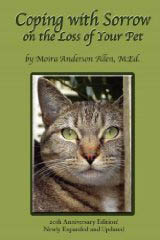
Moira Allen is the editor of Writing-World.com, and has written nearly 400 articles, serving as a columnist and regular contributor for such publications as The Writer, Entrepreneur, Writer's Digest, and Byline. An award-winning writer, Allen is the author of numerous books, including Starting Your Career as a Freelance Writer, The Writer's Guide to Queries, Pitches and Proposals, and Coping with Sorrow on the Loss of Your Pet. In addition to Writing-World.com, Allen hosts VictorianVoices.net, a growing archive of articles from Victorian periodicals, and The Pet Loss Support Page, a resource for grieving pet owners. She lives in Kentucky with her husband and the obligatory writer's cat. She can be contacted at editors "at" writing-world.com. |
| ||||
| |||||